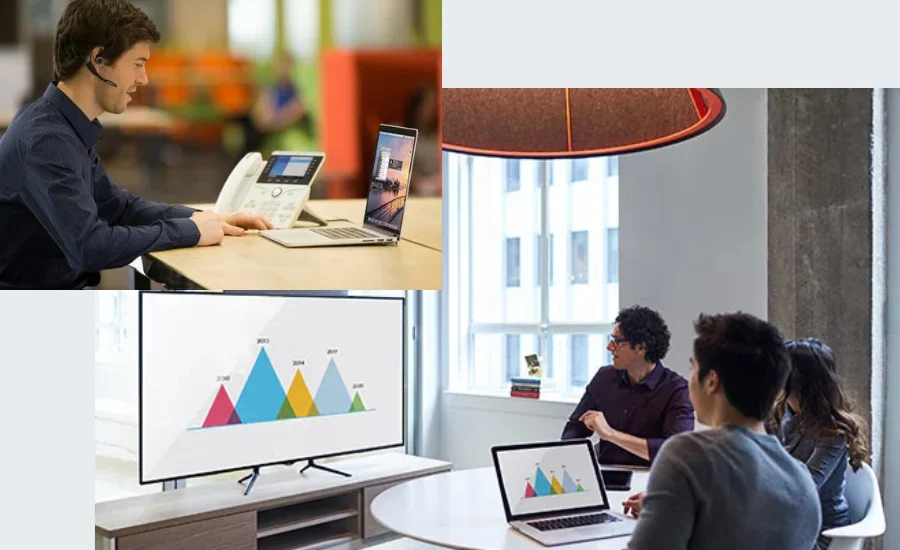
Cloud Connected Audio refers to audio devices and systems that use cloud technology to store, stream, manage, and process sound content over the internet. Instead of relying solely on local storage or direct connections, these systems connect to remote servers, allowing users to access music, podcasts, voice recordings, and other audio content from virtually anywhere. Common examples include smart speakers, internet radios, and cloud-based audio streaming platforms.
The main advantage of cloud connected audio is convenience and flexibility. Users can synchronize playlists across multiple devices, stream content on demand, receive software updates automatically, and use voice assistants for hands-free control. As internet connectivity continues to improve, cloud connected audio is becoming an essential part of modern entertainment, smart homes, and digital communication systems.
What is cloud-connected audio?
Cloud connected audio refers to audio systems and devices that rely on cloud technology to process, store, and enhance sound in real time. Instead of depending solely on local hardware a chip inside a speaker, a hard drive in a media player these systems reach out to remote servers to do the heavy lifting. Your speaker becomes a listening point. The cloud becomes the brain.
Your device makes a request to a distant server when you stream a music.That server stores the music file and sends it back in real time. Cloud connected audio works the same way, except the connection is more continuous and more intelligent. The system learns your preferences, adjusts sound profiles, syncs across rooms, and responds to your voice all through that constant cloud link.
Read More: EO PIS
A Brief History of Audio Going Digital
Audio technology has moved through several defining chapters. Analog systems gave way to compact discs, which gave way to MP3 players, which gave way to smartphones. Each shift brought new convenience but also new trade-offs. The move to streaming removed the need for physical media entirely. Cloud connected audio is the next step in that progression one where the device in your hand or on your shelf is no longer the limiting factor. Computing power, storage capacity, and intelligence now live elsewhere and arrive on demand.
The Role of Artificial Intelligence
Artificial intelligence is now deeply woven into how cloud audio systems operate. AI analyzes listening patterns, builds playlists before you even ask, and adjusts sound based on time of day, room acoustics, and activity type. Some systems lower bass frequencies in the morning and increase them in the evening based on learned user behavior. AI-powered noise reduction algorithms clean up background interference in real time, making calls and recordings cleaner without manual editing. This is something a standard Bluetooth speaker simply cannot do. Cloud connected audio gives the system a brain, not just a voice.
How Multi-Room Audio Works
One of the most visible consumer benefits is the ability to fill an entire home with synchronized sound. Multi-room audio through cloud systems means a playlist started in the kitchen continues seamlessly in the living room without skipping a beat. Users manage everything from a single app, adjusting volume, switching tracks, or grouping and ungrouping rooms as they move through the house. Companies like Sonos built their entire product identity around this capability, and it remains one of the strongest selling points for cloud audio hardware.
Enterprise and Business Applications
Cloud connected audio is not limited to consumer living rooms. Businesses were early and enthusiastic adopters, and the scale of deployment in corporate environments is significant. Cisco’s Webex Cloud Connected Audio, for instance, provides enterprises with managed telephony services that route calls through cloud infrastructure rather than traditional landlines. IT administrators can monitor and manage audio systems across global offices from a single centralized control panel. Devices can be configured and updated remotely in minutes, without requiring on-site technical visits. This kind of operational efficiency was simply not possible with legacy audio infrastructure.
Healthcare, Education, and Beyond
The reach of this technology extends well past music and meetings. Hospitals are using cloud-managed audio environments to pipe calming soundscapes into patient rooms, adjusting content and volume from a central tablet at the nurses’ station. Schools are deploying cloud audio systems to support remote and hybrid classrooms, giving teachers the ability to control audio levels and share content with students in entirely different cities. Podcast creators use cloud audio platforms to edit, enhance, and publish without ever setting foot in a traditional studio. The technology has become operational infrastructure across sectors that rarely overlapped with audio technology before.
Sound Quality: Dispelling the Streaming Myth
A persistent concern about cloud audio has been sound quality. Many listeners assumed that streaming meant compression, and compression meant inferior audio. That assumption is now outdated. Cloud platforms now support lossless audio, meaning the file a listener hears is very close to the original studio recording. Services such as Apple Music, Tidal, and Amazon Music offer lossless and hi-res options at no additional cost. Cloud systems can also adjust audio in real time, compensating for room acoustics, device limitations, and ambient noise in ways that static, locally stored files never could.
Smart Speakers and the Voice Control Revolution
The mass-market adoption of cloud connected audio happened largely because of smart speakers. When Amazon launched Alexa-enabled devices and Google followed with its own ecosystem, millions of households got their first taste of cloud audio without thinking of it in technical terms. Asking a ceiling-mounted speaker to play a specific song, adjust the volume, or switch to a podcast playlist all of that is cloud audio working in the background. The interface is voice. The infrastructure is cloud.
Privacy and Data Security Considerations
With cloud connectivity comes a legitimate and serious question about data. These systems collect listening habits, voice commands, device usage patterns, and location data. Users benefit from personalization precisely because that data is gathered and analyzed. Reputable platforms address this through end-to-end encryption, multi-factor authentication, and transparent privacy controls. However, informed users are right to read privacy policies carefully, limit unnecessary data sharing, and choose platforms with clear, auditable data practices. Privacy is not a reason to avoid cloud audio, but it is a reason to be a thoughtful consumer of it.
Challenges and Limitations Worth Knowing
No technology is without friction. Cloud connected audio relies on internet connectivity, and any disruption to that connection affects performance. Latency the delay between a command and its execution can be an issue on slower networks, particularly noticeable when audio is paired with video. Content ownership questions remain unresolved in many jurisdictions, with licensing agreements determining what content is available on which platforms in which regions. For professionals working in broadcasting or live sound, the technology still has maturity gaps compared to dedicated hardware setups. These are engineering challenges being actively worked on rather than fundamental flaws, but consumers and businesses should factor them into purchasing decisions.
Why People Search for This Keyword
Search interest in “cloud connected audio” comes from several overlapping groups. IT professionals research it when evaluating enterprise communication systems. Home technology enthusiasts investigate it when planning smart home setups. Audio engineers look into it when exploring new production workflows. Educators and healthcare administrators search for it as they modernize their facilities. And everyday consumers land on it when trying to understand why their smart speaker behaves the way it does. The keyword sits at the intersection of multiple industries, which explains why search volume continues to grow.
Social Media Presence and Community Discussion
Cloud connected audio does not have a dedicated social media channel or brand identity it is a technology concept, not a single company. However, its presence across social platforms is substantial. Technology reviewers on YouTube regularly cover smart speakers, wireless audio systems, and home automation setups that are all fundamentally cloud audio products. Reddit communities like r/sonos, r/homeaudio, and r/smarthome discuss cloud audio integration constantly. LinkedIn hosts ongoing professional conversations about enterprise audio infrastructure and hybrid work environments. Twitter and Instagram see frequent product launch coverage from brands like Sonos, Bose, and Amazon, all of which sit squarely in this technology space.
Leading Companies Shaping the Landscape
Several companies have emerged as defining forces. Sonos built a hardware ecosystem specifically around cloud-connected multi-room audio. Amazon and Google embedded cloud audio into smart home ecosystems that now sit in hundreds of millions of homes. Apple brought lossless audio and spatial sound to its streaming platform. Cisco integrated cloud audio into professional communication tools used by Fortune 500 companies. Yamaha and Harman Kardon continue advancing professional and consumer hardware designed for cloud connectivity. The diversity of these players reflects how broad the technology’s reach has become.
The Future: Spatial Audio, AR, and Beyond
The next wave is already forming. Spatial audio sound that responds to physical movement and creates three-dimensional listening experiences is becoming mainstream through platforms like Apple Music and gaming engines. Audio augmented reality, where digital sound layers interact with physical environments through wearable devices, is an active area of development. AI-driven composition tools are beginning to create generative background audio in real time, adapting to mood, activity, and context. As internet infrastructure improves globally and 5G networks expand, latency will decrease and reliability will increase, removing the last technical barriers to seamless cloud audio everywhere.
Industry Relevance and Market Scale
The numbers behind this technology are significant. The global music streaming market was projected to reach $150.8 billion by 2025, growing at a compound annual growth rate of 14.7% from 2020. Cloud audio infrastructure underpins that entire market. Beyond music, the enterprise audio communications segment, smart home device market, and professional broadcast industries all represent substantial and growing revenue pools tied directly to cloud connected audio adoption. This is not a niche sector. It is a foundational layer of the modern digital economy.
Also More: Tortellinatrice
FAQs
1. What is cloud connected audio in simple terms?
It is an audio system where your speaker, headphones, or microphone connects to internet-based servers that handle processing, storage, personalization, and synchronization giving it far more capability than a standalone device.
2. Do I need a fast internet connection to use it?
A reliable connection makes a significant difference. Most streaming services require at least 1–5 Mbps for standard quality, with higher speeds needed for lossless or spatial audio formats.
3. Can cloud audio work without the internet?
Some local playback features may work offline, but most cloud-specific capabilities syncing, personalization, remote control require an active internet connection.
4. Is the sound quality worse than physical media?
Not anymore. Lossless and hi-res audio formats on platforms like Apple Music and Tidal match or closely approach studio master quality.
5. What is latency and why does it matter?
Latency is the delay between a command and its audio response. In most music listening contexts it is imperceptible, but in video-audio synchronization or live performance settings it requires careful management.
Final Words
Cloud connected audio represents something larger than a product upgrade cycle. It marks the point at which sound one of the most fundamentally human experiences became part of the connected digital infrastructure that already governs how we communicate, work, and navigate the world. The shift from a Bluetooth speaker with a small chip to a device backed by server farms, AI algorithms, and global streaming networks is not an incremental change. It is a category transformation, one that touches consumers relaxing at home, surgeons managing patient environments, teachers reaching students across borders, and engineers producing music in apartments rather than million-dollar studios.
For anyone trying to understand the technology, the opportunity, or the implications, the core message is straightforward: cloud connected audio is already here, already embedded in daily life, and already expanding into spaces no one expected a decade ago. The question is not whether to engage with it, but how thoughtfully. Choosing platforms with strong privacy practices, understanding the capabilities and limitations of your hardware, and staying curious about what comes next spatial audio, generative soundscapes, AR-integrated listening will ensure that the sound experience keeps improving in ways that genuinely enrich rather than merely complicate life.