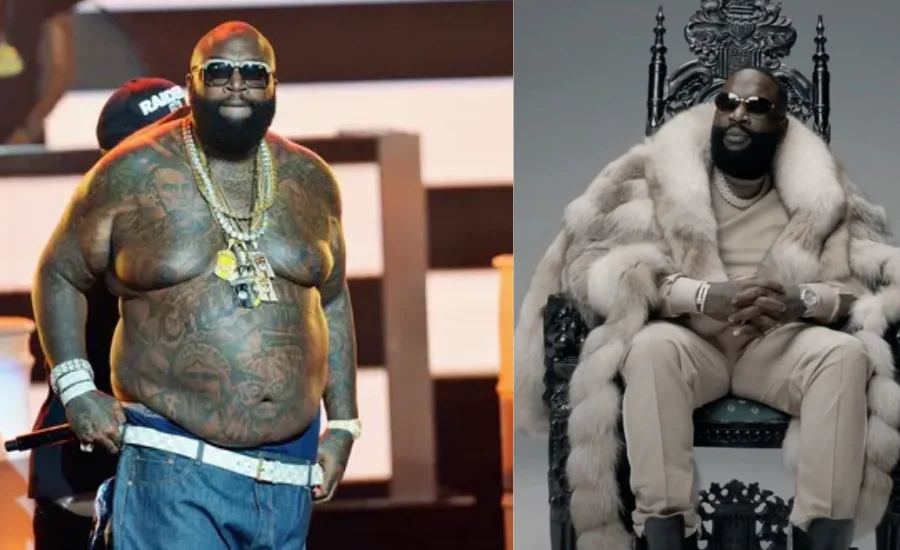
Rick Ross did not build his fortune from music alone. While his albums and hit songs made him famous, he understood early that real wealth comes from ownership. Over the years, he invested heavily in businesses like Wingstop franchises, luxury real estate, and alcohol brands, turning rap success into long-term financial growth. Instead of spending everything on flashy purchases, Ross focused on buying assets that could continue making money long after the music slowed down.
His journey was not always smooth. In the late 2000s, reports suggested he was struggling financially despite projecting a luxurious lifestyle in his music. But rather than collapse under pressure, Ross reinvented himself as a businessman. By 2026, he had built an estimated $150 million empire and was purchasing multimillion-dollar properties in cash. His story became an example of how discipline, branding, and smart investments can transform entertainment success into lasting wealth.
Quick Bio
| Full Birth Name | William Leonard Roberts II |
|---|---|
| Stage Name | Rick Ross / Rozay / The Bawse |
| Date of Birth | January 28, 1976 |
| Age (2026) | 50 years old |
| Birthplace | Clarksdale, Mississippi, USA |
| Raised In | Carol City, Florida (Miami) |
| High School | Miami Carol City Senior High School |
| College | Albany State University (football scholarship) |
| Pre-Fame Career | Correctional officer, Florida Department of Corrections, 1995–1997 (18 months) |
| Rap Career Start | 2006 — debut album Port of Miami (No. 1, Billboard 200, first-week: 187,000+ units) |
| Studio Albums | 11 studio albums (all charted in Billboard Top 10) |
| Signature Hit | “Hustlin'” (2006) |
| Record Label Founded | Maybach Music Group (MMG), 2009 — home to Meek Mill, Wale, French Montana, Gunplay |
| Estimated Net Worth (2026) | $150 million USD |
| Music Earnings (career) | $90+ million from albums, tours, and streaming |
| Flagship Property | The Promise Land — Fayetteville, Georgia; 322 acres, 54,000 sq ft, 109 rooms; purchased 2014 for $5.8M; now valued at $30M+ |
| Miami Property | Star Island mansion — purchased 2023 for $37M in cash |
| Atlanta Property | Former Meek Mill estate — purchased April 2023 for $4.2M cash |
| Restaurant Franchises | 30+ Wingstop locations; also Checkers/Rally’s franchises |
| Franchise Revenue (est.) | $7–12 million annually |
| Spirits Ventures | Equity partner — Luc Belaire Rosé Champagne; McQueen and the Violet Fog gin; Bumbu rum |
| Private Jet | Gulfstream G550 — acquired 2023 through LLC; estimated cost ~$19.5M |
| Car Collection | 200+ vehicles; valued ~$25M; specialises in vintage American Chevrolets and ultra-luxury |
| Driver’s License | First obtained in 2021, age 45 |
| Published Books | Hurricanes (memoir, 2019, NYT Bestseller); The Perfect Day to Boss Up (2021) |
| Religion | Christian — prays before every performance |
| Children | Five: Toie Roberts, William Roberts III, Berkeley Hermes Roberts, Billion Leonard Roberts, Bliss Roberts |
| @richforever | |
| Upcoming Project | Solo album “Set in Stone” (announced late 2025) |
Did You Know? Rick Ross owned more than 200 cars a fleet valued at approximately $25 million for years before he had a valid driver’s licence. He finally passed his driving test in 2021 at age 45, reportedly so he could legally drive his own vehicles on public roads rather than limiting them to his private estate. The man had a fleet worth the GDP of a small island before he could legally pull out of his driveway.
From Clarksdale to Carol City The Background That Built the Bawse
Born in Clarksdale, Mississippi, a town more associated with blues music than billion-dollar ambitions, William Roberts spent his childhood in Carol City, a neighborhood in Miami’s northwest that was rough in the way that quietly shapes everything about a person who gets out of it. His mother, Janice, and his father raised him in conditions that gave him two choices: survive with hustle or survive without it.
Read More: Jean Christensen
He chose to hustle in every direction simultaneously. A football scholarship to Albany State University in Georgia showed he had athletic discipline. A stint as a Florida correctional officer, which he famously denied for years before eventually confirming, showed he could operate inside institutional structures. Neither of those two things explains Rick Ross the rapper. But together they explain Rick Ross the businessman: someone comfortable with discipline, uncomfortable with limitation, and permanently allergic to the idea of a ceiling.
The name he chose Rick Ross, came with its own controversy. The original “Freeway” Ricky Ross was a real Los Angeles drug trafficker who sued the rapper in 2010 for ten million dollars over the name. After three years of litigation, a federal court sided with the rapper, citing First Amendment protections for artistic expression. The irony of a man who started as a corrections officer winning a court case that let him keep the name of a drug kingpin is the kind of layered American story that practically writes itself.
Port of Miami to $150 Million — The Musical Foundation
The debut album arrived in 2006 and landed at number one on the Billboard 200 in its first week. “Hustlin‘” was not just a hit; it was a statement of intent that told the entire industry exactly what kind of artist Rick Ross planned to be: unapologetically large, sonically overwhelming, and commercially serious. Every album that followed Trilla, Deeper Than Rap, Teflon Don, God Forgives I Don’t, and seven more charted in the Billboard Top 10 without exception.
Across his career, music and touring have generated over ninety million dollars in earnings. His live performance rate by 2025 sits between $500,000 and $750,000 per show for major appearances, a fee structure that only makes sense for someone with a catalog deep enough to fill arenas and a persona large enough to fill them twice. Forbes placed him among hip-hop’s highest earners in 2017 with approximately $25 million for that year alone.
Did You Know? Maybach Music Group, the label Rick Ross founded in 2009, was built on a simple principle: sign artists with genuine ability, not just commercial potential, and let the culture decide. The strategy worked. Meek Mill, Wale, French Montana, and Gunplay all passed through MMG and achieved genuine mainstream impact. The label remains one of his most consistent long-term revenue engines, generating income through music sales, licensing, partnerships, and catalog value.
The Business Brain — Where the Real Money Lives
Here is where Rick Ross separates himself from most rappers of his era. While others were buying Lamborghinis with music money, Ross was buying Wingstop franchises. His first location reportedly generated around one million dollars in annual revenue. He looked at that number, liked what he saw, and kept going. By 2026, he will own more than thirty locations across Atlanta, Miami, Mississippi, and Texas. Collectively, those restaurants are estimated to generate between seven and twelve million dollars in annual profit — revenue that arrives whether he releases a song that year or not.
That word “whether” is the most important in Ross’s financial story. He has engineered a life where his income is structurally disconnected from his creative output. The Wingstop locations do not care if he is in the studio. The Luc Belaire champagne partnership does not pause when he goes on tour. The real estate appreciates regardless of his Billboard chart position. This is not accidental. Ross has spoken in interviews about choosing equity over endorsement and owning a stake rather than accepting a one-time payment and that philosophy is visible in every deal he has signed in the last decade.
The spirits portfolio alone deserves its own paragraph. Luc Belaire Rosé became one of the most visible luxury champagne brands in hip-hop culture largely because of Ross’s association with it his music videos, his events, his social media, his sheer physical presence all became marketing material for a product he partially owns. He repeated the same model with McQueen and the Violet Fog gin and his involvement in Bumbu rum. He did not just sell his name. He sold his name in exchange for a portion of the company.)
The Promised Land—Georgia’s Biggest House
In 2014, Rick Ross paid $5.8 million for a 54,000-square-foot mansion in Fayetteville, Georgia, that had previously belonged to boxing legend Evander Holyfield. The property spans 235 acres, which he later expanded to 322 acres by purchasing adjacent land in 2020, and contains 109 rooms, a bowling alley, a recording studio, a gym, a private lake, multiple pools, and the kind of space that takes a full day to walk through completely.
He named it The Promise Land. Every year, he throws the Rick Ross Car and Bike Show on the estate grounds, an annual event that has evolved into a multi-million dollar revenue stream in its own right, drawing car enthusiasts, fans, and media from across the country. The property has also been used as a filming location for movies and television shows, generating additional location rental income. The mansion purchased for $5.8 million is now estimated to be worth over $30 million.
Then in 2023, he paid $37 million in cash for a waterfront property on Star Island in Miami one of the most exclusive addresses in all of American real estate. He also purchased Meek Mill’s former Atlanta estate the same year for $4.2 million cash. Three major real estate acquisitions in a single year, two of them paid fully in cash. The financial picture that is created is staggering.
Did You Know? In 2023, Ross claimed publicly that he had spent one hundred million dollars in six months. Even accounting for the natural theatrics of Rick Ross being Rick Ross, the combination of his Star Island purchase ($37M cash), his Atlanta estate acquisition ($4.2M cash), his Gulfstream G550 acquisition (~$19.5M), and his ongoing franchise expansions make a figure in that territory genuinely plausible. He is a man whose expenditure is so large that it occasionally sounds like exaggeration even when it is not.
Also More: Vegas Matt Net Worth
Social Media, Public Image, and the Brand Called Rozay
Rick Ross operates his public image the way he operates his businesses with total intentionality and zero ambiguity about what he is selling. His Instagram handle is @richforever, which tells you everything about the brand philosophy before you even open the page. Every post, every video, every appearance is a coordinated transmission of the same message: abundance, ownership, confidence, and scale.
His YouTube channel has accumulated over two billion views, a catalog so large that streaming royalties alone represent meaningful passive income. He uses his social platforms as storefronts, seamlessly moving between promoting music, Belaire, Wingstop, his car show, and his published books without the transitions ever feeling incoherent. The Rozay persona is consistent enough that it contains multitudes without fragmenting.
The persona has also survived real challenges. His correctional officer past was denied, then confirmed. His health, including seizures that led to hospitalization in 2018, became public. A $100,000 fine from the Department of Labour for labour violations at five Wingstop locations in 2022 briefly made headlines. A Georgia tax lien for approximately $65,000 in back taxes surfaced in late 2025. These are the kinds of stories that would permanently damage a less established brand. For Ross, they are absorbed into the mythology of a man too large and too diverse to be contained by any single narrative.
“Land appreciates. The concrete and the steel appreciate. I’m not playing games with my investment.” Rick Ross, Forbes interview, 2022
FAQs
What is Rick Ross’s net worth in 2026?
His net worth is consistently estimated at $150 million USD across major financial tracking publications as of 2026. This figure reflects the combined value of his real estate portfolio (approximately $50 million), his Wingstop franchise empire, his spirits equity partnerships, his music catalogue, his car collection (approximately $25 million), his private jet, and ongoing revenue from Maybach Music Group. Some analysts suggest his true asset value could exceed this if unreported holdings and business valuations are factored in.
How did Rick Ross actually make his money — is it mostly music?
Music built the foundation — $90 million plus across his career from albums, tours, and streaming. But the ongoing wealth engine is not music at all. It is his Wingstop franchise network (30+ locations generating an estimated $7–12 million annually), his equity stake in Luc Belaire champagne and other spirits brands, his real estate portfolio, Maybach Music Group’s label operations, and event revenue from his annual Car and Bike Show. Ross has specifically engineered his finances so that income continues whether or not he releases new music in a given year.
Does Rick Ross own the Evander Holyfield mansion?
Yes. He purchased the property a 54,000-square-foot, 109-room estate in Fayetteville, Georgia — in 2014 for $5.8 million. He later expanded the surrounding land to 322 acres. He renamed it The Promise Land. It now serves as his primary residence, the venue for his annual Car and Bike Show, and a filming location for movies and television, generating rental income beyond its residential use. Its current estimated value exceeds $30 million.
How many Wingstop locations does Rick Ross own?
More than thirty franchise locations as of 2026, spread across Georgia, Florida, Mississippi, and Texas. His first location earned approximately one million dollars annually, which gave him the confidence to expand aggressively. The full portfolio is estimated to generate between seven and twelve million dollars in profit per year — income that arrives independent of his music or media activity.
Did Rick Ross really pay for his Star Island mansion in cash?
According to reporting from 2023, yes the $37 million Star Island property was paid for in cash. He also purchased Meek Mill’s former Atlanta estate in the same year for $4.2 million in cash. Two major cash property acquisitions in a single year underline just how liquid his diversified income streams have made him. This is not spending wealth this is deploying it into assets that continue to appreciate.