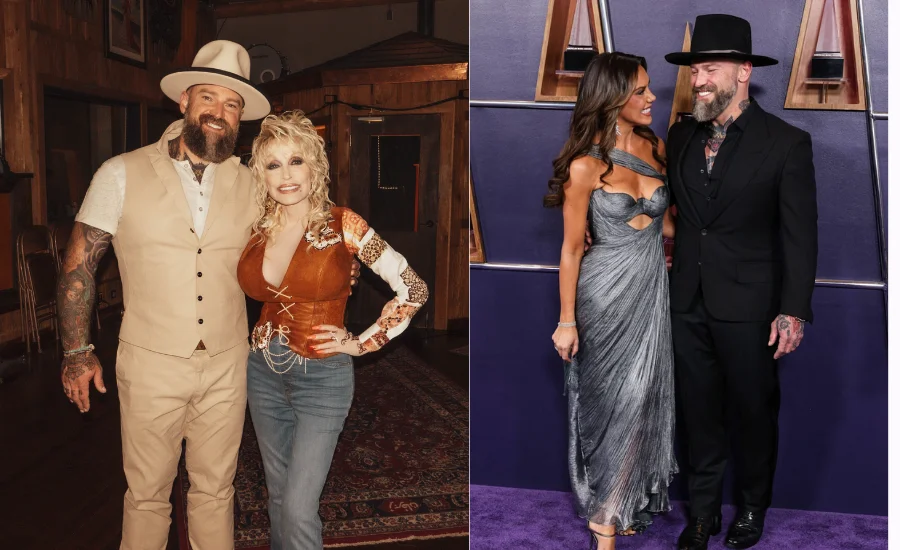
There’s a particular kind of American story that doesn’t get told often, like Zac Brown, the one where a kid from a small Georgia town, surrounded by siblings and bluegrass weekends, quietly becomes one of the most powerful forces in country music without anyone really seeing it coming. Zac Brown is that story. And the deeper you go, the stranger and richer it gets.
He wasn’t handed a record deal. He bought a tour bus with restaurant money. He once played 200 shows a year to audiences that barely filled a room. Now he fills stadiums. The journey between those two realities is everything.
Full Bio Table
| Detail | Info |
|---|---|
| Full Name | Zachry Alexander Brown |
| Date of Birth | July 31, 1978 |
| Age (2026) | 47 years old |
| Birthplace | Cumming, Georgia, USA |
| Raised | Near Lake Lanier, Georgia |
| Zodiac Sign | Leo |
| Nationality | American |
| Ethnicity | Caucasian-American |
| Height | Approx. 5’11” (1.80 m) |
| Siblings | 11 (second youngest of twelve children) |
| Mother | Bettye Brown |
| Stepfather | Dr. Jody Moses (dentist) |
| Education | Lumpkin County High School; University of West Georgia (did not graduate) |
| Fraternity | Kappa Alpha Order |
| Occupation | Singer, songwriter, musician, entrepreneur |
| Band | Zac Brown Band (co-founder, lead vocalist) |
| Solo Project | The Controversy (2019 pop album) |
| EDM Project | Sir Rosevelt |
| Record Label | Southern Ground |
| Studio | Southern Ground Nashville (formerly Masterlink Studio) |
| Knife Brand | Southern Grind Knives |
| Wine Label | Z. Alexander Brown |
| Charity | Camp Southern Ground (founded 2013) |
| Grammy Awards | 3 wins |
| Net Worth (est.) | $50–60 million |
| Children | 5 (Alexander, Joni, Georgia, Lucy, Justice) |
| First Marriage | Shelly Brown (2006–2018) |
| Second Marriage | Kelly Yazdi (Aug 2023 — separated Dec 2023) |
| Current Partner | Kendra Scott (engaged July 2025) |
Lake Lanier, Twelve Kids, and One Guitar
Did you know Zac Brown grew up as child number eleven out of twelve? That’s not a detail, that’s a context. Growing up in a household that large, near the shores of Lake Lanier in Georgia, you either disappear into the crowd or you figure out how to make people pay attention to you.
Read More: Lakeisha Mims
Zac chose music.
His mother handed him a guitar at age eight. A patient of his stepfather, a dentist named Dr. Jody Moses, agreed to teach the boy classical guitar technique for two years. Those lessons gave him the foundation. But what actually lit the fire was something less structured: weekend visits with his father and brother, sitting around playing bluegrass. That informal, joyful, deeply Southern tradition became the emotional center of everything he would later build.
By the time he hit high school, he’d already moved from Cumming to Dahlonega, eventually graduating from Lumpkin County High School. Then came the University of West Georgia, Kappa Alpha Order, and predictably, an increasing realization that classrooms couldn’t compete with stages. He left before completing his degree. He worked two summers at camps called Camp Mikell and Camp Glisson. Those experiences planted a seed that would grow decades later into Camp Southern Ground, his nonprofit dedicated to children and veterans.
The dropout narrative is easy to sensationalize. But the truth is simpler: the music just mattered more than anything else on the schedule.
Restaurants, Tour Buses, and the Bet That Changed Everything
Here’s where the story gets genuinely cinematic. In 2004, Zac Brown sold his restaurant in Lake Oconee, Georgia. Not because it was failing. Not because he’d run out of ideas. He sold it because he needed money for a tour bus, and a tour bus was the only thing standing between him and a full-time music career. He took the cash, bought the bus, and committed completely to a band that at the time had no major label, no chart presence, and no guarantee of anything.
That’s not romantic naivety. That’s a calculated, terrifying bet the kind only people who actually believe in something make.
The Zac Brown Band had already been taking shape since 2002, built around bassist John Hopkins and fiddler Jimmy De Martini. They’d been releasing independent music, building regional audiences, playing wherever anyone would have them. At his peak hustle, Zac was performing close to 200 nights a year. Think about what that schedule does to a person. Think about what it does to a voice, a body, a personal life. He did it anyway.
Then came 2008. Atlantic Records picked up distribution of a single called “Chicken Fried.” The album The Foundation followed. It peaked at number two on Billboard’s Hot Country chart and went platinum then triple platinum. From selling a restaurant to triple platinum in roughly four years.
September 11, 2001 had something to do with the urgency. Brown has said the tragedy crystallized something for him life was too brief to spend chasing a path he didn’t believe in. Music wasn’t optional anymore. It was the whole point.
The Awards, the Records, and the Collaborators You Didn’t Expect
Three Grammy Awards. Multiple CMA nominations. ACM wins. A spot at Bonnaroo. An opening slot for Dave Matthews Band.
The Zac Brown Band’s discography reads like a greatest hits of modern country-adjacent music: The Foundation, You Get What You Give, Uncaged, Jekyll + Hyde. Their 2010 album You Get What You Give hit number one on the Billboard Hot 200 not country chart, the full chart. That’s a different kind of milestone.
But what makes Zac Brown genuinely fascinating as an artist isn’t just the country lane it’s how freely he swerves out of it. The band has collaborated with Dave Grohl, Skrillex, and Dolly Parton. The same person. Different sessions, different sonic universes, equal enthusiasm. In 2019, he went solo with The Controversy, a pop album that confused some fans and thrilled others. He also co-founded Sir Rosevelt, an electronic dance music project. The guy who learned classical guitar at eight later produced EDM.
Genre, for Zac Brown, has never been a cage. It’s always been more of a suggestion. In 2022, Ubisoft-style recognition came from an unexpected corner: The Voice, where Brown appeared as a mentor. He also appeared on Lil Dicky’s charity single “Earth” in 2019, alongside a genuinely surreal list of contributors. In 2026, he participated in a reward challenge for Survivor season 50 proof that the Zac Brown universe continues expanding in directions nobody predicted.
The Business Empire Nobody Talks About Enough
Here’s what separates Zac Brown from most musicians: he built infrastructure while building music, and the two things grew at the same pace. Southern Ground Nashville, his recording studio, purchased in 2012 from Nashville’s Music Row and completely rebuilt, became both a creative home and a business anchor. Southern Ground, the record label, gave independent artists a platform under its banner.
Southern Grind Knives, based in Peachtree City, Georgia, sells tactical knives built for hard use. It’s a niche product with a clear audience, outdoors people, hunters, and people who take tools seriously, and it fits the Zac Brown aesthetic exactly. He also holds a wine label, Z. Alexander Brown, with a product line that has its own devoted following.
The Z. Brown Distillery in Lumpkin County, Georgia, was another venture launched in 2017 and closed in November 2018. Not every bet pays off. Zac Brown has been around long enough to know that and say so without drama.
Then there’s Camp Southern Ground, the nonprofit he founded in 2013. The camp serves children, including those with developmental challenges and military families. It earned him the Veterans Voice Award. It is, by most accounts, the venture he is most personally invested in. When he has said that music feeds the soul, but generosity feeds something deeper, Camp Southern Ground is the evidence behind the statement.
Social Media and Public Image: The Beanie as a Brand
Zac Brown’s public image is deceptively uncomplicated. The beanie. The beard. The flannel energy. The sound of someone who could play campfire acoustic or arena rock without changing a single instinct about how to approach either.
His social media presence across platforms reflects that same grounded-but-expansive quality. He’s not chasing viral moments. His content tends to track the music, the band, the charity, and the occasional glimpse into a life that genuinely seems to move at a pace he chose.
On Instagram, he has millions of followers who arrived because of the music and stayed because the posts feel real. On X (formerly Twitter), he’s present but not performative. His TikTok presence captures band moments, behind-the-scenes studio footage, and concert energy, the kind of content that makes new fans curious without alienating people who’ve been there since “Chicken Fried.”
The 2016 Palm Beach incident, a police raid at a Four Seasons hotel where Brown was present but not arrested, with prescription pills found in his possession, created a public moment he had to navigate carefully. His response was measured: he acknowledged being somewhere he shouldn’t have been and moved forward. The story faded faster than it might have for someone with a more manufactured image, partly because his audience had built enough trust in the actual person to absorb a complicated moment.
Read More: Kathleen Nimmo Lynch
Marriages, Five Kids, and Kendra Scott
Zac Brown’s personal life has moved through chapters that would take most people decades to fully process. He married Shelly Brown in 2006. Together, they raised five children: son Alexander and daughters Joni, Georgia, Lucy, and Justice. The marriage lasted twelve years and ended in 2018, reportedly without public bitterness, with a shared commitment to their kids remaining intact. His family life echoes through his music constantly; the songs about simple pleasures, about coming home, about what actually matters, carry autobiographical weight.
In 2023, he married model and actress Kelly Yazdi in what was described as a private ceremony. By December of the same year, barely four months later, they had separated and announced plans to divorce. Legal disputes followed, including lawsuits and reports of restraining order attempts. It was messy in the specific way that very public separations always become messy, and Brown handled the scrutiny with the same measured energy he’d applied to other difficult moments.
Then came Kendra Scott, jewelry designer, entrepreneur, and philanthropist. Brown and Scott became public as a couple in early 2025, debuting together at the American Music Awards in May 2025. On July 24, 2025, he announced their engagement. Together, they’re building what is reportedly a blended family of eight children. The next chapter, apparently, is the biggest one yet.
FAQs
1. How old is Zac Brown in 2026?
47 years old. Born July 31, 1978.
2. What is Zac Brown’s full real name?
Zachry Alexander Brown. He goes by Zac professionally.
3. Where did Zac Brown grow up?
Near Lake Lanier in Cumming, Georgia. Later moved to Dahlonega.
4. How many siblings does Zac Brown have?
He’s one of twelve children — the eleventh born.
5. When did Zac Brown start playing guitar?
At age eight, when his mother gave him his first guitar.
6. Did Zac Brown finish college?
No. He enrolled at the University of West Georgia but left to pursue music full-time.
7. How many Grammys has the Zac Brown Band won?
Three Grammy Awards, including Best New Artist in 2010.
8. What is Zac Brown’s biggest hit? “
Chicken Fried” is probably the most iconic, but “Toes,” “Colder Weather,” and “Knee Deep” all have massive followings.
Final Word
Forty-seven years old. Three Grammys. Five kids. A recording studio on Music Row. A knife company. A wine label. A nonprofit camp for children and veterans. An EDM side project nobody fully saw coming. A pop album that confused and excited in equal measure. An engagement that made headlines in 2025. A Survivor challenge appearance in 2026.
The thing about Zac Brown is that his career doesn’t fit the narrative arc people try to assign it. He’s not a country purist. He’s not a crossover sellout. He’s not a cautionary tale or a comeback story. He’s something rarer, a person who figured out what he loved, bet everything on it when he was young enough to risk it all, and spent the following decades building something so layered that no single label ever fully sticks to it.