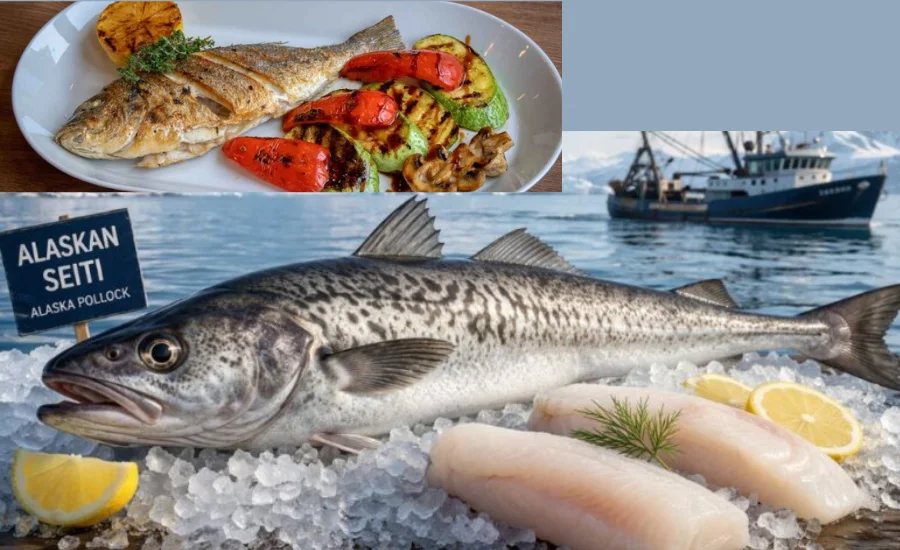
If you’ve come across the term “Alaskan seiti” and wondered what it means, here’s the short answer: in most food and seafood contexts, it refers to Alaska pollock a mild, white fish from the cold waters of the North Pacific. The name “seiti” is simply a regional term, used more often in Finland and other Nordic markets, for the same fish that English-speaking countries usually call pollock or walleye pollock. If you’ve eaten a fast-food fish sandwich, fish sticks, or imitation crab, there’s a good chance you’ve eaten this fish without ever seeing its name on the package.
What is the Alaskan Seiti?
Before going further, it’s worth flagging something directly: the word “seiti” does double duty in a way that can genuinely mislead people. In food and fishery contexts, it points to Alaska pollock, the cod-family fish described throughout this article. But in the context of Alaska Native culture, “seiti” can also refer to something completely different traditional rendered fat or blubber from marine mammals, a food source with deep historical importance to Inupiat, Yup’ik, and coastal Aleut communities. These are two unrelated meanings sharing similar phrasing online, and conflating them would do a disservice to both topics. This article focuses on the seafood meaning, since that’s the one most commonly searched and the one with the clearest, most well-documented information available.
The Fish Behind the Name
Scientifically, Alaska pollock is known as Gadus chalcogrammus. It belongs to the cod family, alongside relatives like cod and haddock, though it has its own distinct identity in commercial fishing and food production. The U.S. Food and Drug Administration’s official seafood list recognizes “pollock” as the acceptable market name, with “walleye pollock” as a common alternate name. According to NOAA Fisheries, it’s described as a semipelagic schooling fish meaning it lives and moves in large groups, partway between the surface and the seafloor, rather than staying near the bottom like some other groundfish.
The fish itself has light-colored, delicate flesh with a mild flavor, which is exactly why it works so well in so many different foods. It doesn’t have the strong, oily taste of mackerel or sardines, so it takes on seasoning easily and doesn’t dominate a dish. That neutral profile is a big part of why food manufacturers rely on it so heavily it can be shaped, flavored, and processed into a wide range of products without fighting against a strong natural taste.
Read More: Murray Hone
Where Alaska Pollock Actually Comes From
Alaska pollock lives in the cold, nutrient-rich waters of the North Pacific Ocean, with the largest concentrations found in the eastern Bering Sea, according to NOAA. It’s also found in the Gulf of Alaska and around the Aleutian Islands. These waters are naturally productive cold currents bring up nutrients that support large populations of plankton, which in turn support huge schools of pollock and the rest of the food web around them.
This isn’t a niche or obscure fishery. According to NOAA Fisheries, Alaska pollock is the second-largest fishery in the world and the largest in the United States by volume. It’s estimated to be worth around $1.9 billion and supports close to 30,000 U.S. jobs, spanning harvesting, processing, distribution, and retail. That scale is part of why the fish ends up in so many everyday food products, even when consumers never see its name directly on the label.
How It’s Caught
Most Alaska pollock is caught using pelagic trawl gear large, cone-shaped nets that are towed through the middle of the water column rather than dragged along the seafloor. NOAA notes that while this gear can sometimes make contact with the bottom, its overall impact on ocean habitat is minimal. This matters because bottom-trawling in general has a reputation for damaging seafloor ecosystems, and pollock fishing is specifically structured to avoid that kind of disturbance.
Bycatch the unintentional catching of other species is another major concern in commercial fishing generally, and it’s one of the areas where the pollock fishery is most often highlighted as a positive example. NOAA states that the fishery is one of the cleanest in terms of incidental catch, with non-target species making up less than 1 percent of the total catch. When other species are caught incidentally, food-grade catch is often donated through a program called SeaShare, which channels it to food banks across the United States rather than letting it go to waste.
Why People Call It Sustainable
“Sustainable” gets used loosely in food marketing, so it’s worth being specific about what backs up the claim here. NOAA Fisheries states that U.S. wild-caught Alaska pollock is sustainably managed and responsibly harvested under U.S. regulations, with stocks in the Aleutian Islands, Eastern Bering Sea, and Gulf of Alaska regions confirmed as not overfished and not currently subject to overfishing. The fishery is also certified by the Marine Stewardship Council (MSC), one of the most widely recognized third-party sustainability certifications in the seafood industry, and by Certified Seafood International.
Management of the fishery is handled jointly by NOAA and the North Pacific Fishery Management Council, using catch quotas based on peer-reviewed science rather than industry guesswork. According to the Alaska Pollock Fishery Alliance, this approach is often cited as something close to a global standard for how a large commercial fishery should be run. Quotas are set annually using ecosystem-based management, and there’s ongoing scientific monitoring of stock health through tools like NOAA’s StockSMART system. None of this means the fishery is without critics or without environmental impact altogether, but the scientific and regulatory record behind the sustainability claims is genuinely substantial, not just a marketing phrase.
Nutrition: What’s Actually in This Fish
Alaska pollock is a lean source of protein. It’s low in fat and low in carbohydrates, which is part of why it’s frequently recommended for people looking for lighter meal options without sacrificing protein content. Like most white fish, it doesn’t carry the same omega-3 fat density as oilier fish like salmon or mackerel, but it still contributes meaningfully to a balanced diet, particularly for people who want a mild-tasting protein that’s easy to prepare in multiple ways.
Because the fish is so mild, it’s often used as a base for dishes where the seasoning, sauce, or coating does most of the flavor work think breaded fish fillets, fish tacos, or chowders. This makes it a practical choice for home cooks who want a fish that won’t taste “fishy” in the way some people find off-putting, while still getting the textural and nutritional benefits of seafood.
Where You’ve Probably Already Eaten It
This is where the fish becomes genuinely surprising to most people. Alaska pollock is the primary ingredient in many of the most common processed seafood products sold in the U.S. and globally. Frozen fish sticks, breaded fish fillets used in fast-food sandwiches (including the well-known Filet-O-Fish), and imitation crab meat (also called surimi) are all typically made from this fish. Surimi in particular is a fascinating use case pollock flesh is processed, flavored, and shaped to mimic the texture and appearance of crab meat, and it shows up in sushi rolls, salads, and seafood dishes around the world.
Because pollock is processed into so many different end products, most consumers never see the word “pollock” let alone “seiti” anywhere on the package. It hides behind brand names and generic descriptions like “whitefish” or “seafood blend.” That invisibility is part of what makes this fish interesting: it’s one of the most heavily consumed fish species on the planet, and most people who eat it regularly couldn’t tell you its name.
Why the Name “Seiti” Specifically Shows Up
The regional naming difference comes down to language and market tradition rather than any difference in the fish itself. In Finland and some other Nordic and European markets, “seiti” (or close variants) is the term used for pollock-type white fish in everyday language and on food packaging. When English-language content uses “Alaskan seiti,” it’s typically translating or referencing that regional terminology while pointing to the same species recognized elsewhere as Alaska pollock or walleye pollock.
This kind of naming variation is common in the seafood industry generally the same fish can carry different commercial names in different countries based on tradition, marketing preference, or even regulatory labeling rules. It’s worth being aware of when shopping or reading recipes internationally, since a product labeled differently in two countries may, in fact, be the exact same fish.
Cooking With Alaska Pollock
One of the most practical advantages of this fish is how forgiving it is to cook. It can be baked, pan-seared, fried, steamed, or used in soups and stews, and it holds up reasonably well across most of these methods without falling apart immediately or requiring advanced technique. Because the flavor is mild, it pairs well with a wide range of seasonings lemon and herbs, Asian-inspired marinades, breadcrumb coatings, or simple salt and pepper all work without a fight against the fish’s natural taste.
For home cooks, this makes pollock a practical entry point into cooking fish more often, especially for people intimidated by stronger-flavored or more delicate species. It’s also widely available frozen, which keeps it accessible and affordable in a way that fresh specialty fish often isn’t, and frozen fillets generally retain their quality well due to how quickly the fish is processed after catch.
Economic and Food-Supply Importance
Beyond the dinner table, Alaska pollock plays a meaningful role in food security and coastal economies. According to NOAA, commercial landings of Alaska pollock from the Bering Sea and Gulf of Alaska totaled more than 3 billion pounds in 2023 alone, valued at roughly $525 million at the point of landing figures that reflect just the raw catch, before it’s processed into the wide range of products described earlier. The Genuine Alaska Pollock Producers organization notes that wild Alaska pollock accounts for about 43 percent of all seafood caught in the U.S. by weight, which is a striking share for a single species.
The fishery also contributes directly to hunger relief efforts. Through the SeaShare program mentioned earlier, the industry donates more than a million seafood meals annually to food banks, turning what would otherwise be bycatch or surplus into a meaningful source of protein for people in need. This combination of scale, affordability, and structured donation programs is part of why the fishery is often pointed to as a model for how large-scale commercial fishing can coexist with both environmental management and social benefit.
Environmental Footprint Compared to Other Proteins
A peer-reviewed Life Cycle Assessment conducted in partnership with the Genuine Alaska Pollock Producers found that wild Alaska pollock has a notably lower carbon footprint than many other animal proteins, including beef, chicken, and even some plant-based alternatives, when measured by protein delivered per unit of greenhouse gas emissions. This is a meaningful data point for anyone thinking about the environmental impact of their diet, since fish is sometimes left out of those comparisons in favor of more commonly discussed proteins like beef or poultry.
This lower footprint is connected to a few factors: pollock doesn’t require land, feed crops, or fresh water in the way that livestock farming does, and the wild-catch harvesting method, while it does use fuel for vessels, doesn’t carry the same cumulative resource demands as raising land animals over months or years. None of this means pollock fishing has zero environmental impact no food production system does but the comparative data is a useful, evidence-based reference point rather than a vague marketing claim.
Common Misconceptions Worth Clearing Up
There are a few persistent myths about the pollock fishery that are worth addressing directly, since misinformation tends to spread faster than the underlying facts. One common claim is that pollock fishing significantly harms wild salmon populations through bycatch. According to data cited by the Alaska Pollock Fishery Alliance, the pollock fishery’s impact on salmon returns to Western Alaska rivers is under 2 percent in most years a real but limited effect, not the dominant cause some narratives suggest.
Another common claim is that profits from the fishery mostly benefit foreign companies. In reality, the Alaska pollock fishery operates under the American Fisheries Act and is U.S.-owned, with an estimated 18,000 American jobs tied directly to harvesting and processing, and many more supported through distribution, retail, and foodservice. A third misconception suggests the sustainability certifications are essentially marketing or “greenwashing.” The MSC and CSI certifications, however, involve independent, third-party review processes they aren’t self-awarded labels from the industry itself, which is an important distinction when evaluating sustainability claims in any food sector.
Who Actually Manages This Fishery
Unlike a lot of global fisheries that operate with minimal oversight, Alaska pollock is managed through a structured, science-based system involving NOAA Fisheries and the North Pacific Fishery Management Council. Catch limits are set annually based on stock assessments conducted by the Alaska Fisheries Science Center, which collects data on fish populations, behavior, and ecosystem health year-round. This isn’t a static system quotas can be adjusted based on new data, which is part of why stocks have remained healthy over a long period of active commercial harvesting.
There’s also a feedback loop built into the system through organizations like SeaState, which receives real-time data on incidental catch from individual fishing vessels. When incidental catch in a particular area rises above expected levels, fishermen are notified and often voluntarily stop fishing in that zone. This kind of self-reinforcing, data-driven management is relatively rare in global fisheries and is frequently cited by marine scientists as a reason the Alaska pollock fishery has avoided the population collapses that have affected other major commercial fish stocks worldwide.
Buying Alaska Pollock With Confidence
For consumers trying to make informed seafood choices, a few practical signals can help confirm you’re getting a legitimately sourced product. Packaging that references wild-caught Alaska pollock, includes an MSC certification mark, or specifically notes U.S. origin generally reflects the well-managed fishery described throughout this article. Because naming varies by region and market pollock, walleye pollock, Pacific pollock, or seiti it helps to know that these terms typically point to the same fish rather than assuming they’re different products.
It’s also worth knowing that “imitation crab” or “surimi” labeling almost always indicates a pollock-based product, even when the word “pollock” doesn’t appear anywhere on the package. For shoppers who care specifically about sustainability credentials, looking for the blue MSC certification logo is one of the more reliable shortcuts, since it reflects an independent audit process rather than a company’s own claims about its practices.
A Fish That Works Quietly in the Background
What makes Alaska pollock or Alaskan seiti, depending on where you’re reading about it genuinely interesting isn’t flashiness. It’s the opposite. This is a fish that has become deeply embedded in global food systems specifically because it doesn’t draw attention to itself. It’s mild enough to disappear into other dishes, affordable enough to scale into mass food production, and abundant enough to support one of the most significant fisheries on the planet without depleting the population that sustains it.
That combination of qualities culinary flexibility, nutritional value, economic scale, and a genuinely well-documented sustainability record is fairly rare in modern food production. Most ingredients that reach this level of ubiquity do so by being cheap rather than responsibly managed. Alaska pollock manages to be both, which is part of why fisheries scientists, nutritionists, and sustainable seafood advocates continue to point to it as something close to a best-case example within commercial fishing.
The Bottom Line
If you remember nothing else from this article, remember this: “Alaskan seiti” and “Alaska pollock” are, in virtually all food and seafood contexts, the same fish a mild, white, cod-family species from the cold waters of the North Pacific that quietly shows up in an enormous share of the seafood you’ve probably already eaten. It’s well-documented by NOAA and independently certified as sustainably managed, it’s nutritionally solid as a lean protein source, and it’s about as flexible as fish gets in the kitchen.
The one thing worth carrying forward is the naming caution from earlier: if you ever encounter “seiti” in a Native Alaskan cultural or historical context, it may be referring to something entirely different traditional rendered marine mammal fat, and that distinction deserves its own separate, careful treatment rather than being folded into a seafood-industry explainer. For everyday cooking, shopping, and nutrition purposes, though, Alaskan seiti simply means Alaska pollock: unglamorous, reliable, and far more present on your plate than its low profile would ever suggest.
Also More: EO PIS
Final Words
Alaskan seiti, commonly known as Alaska pollock, is one of the most important seafood species in the world. Found in the cold waters of the North Pacific, this mild white fish is valued for its affordability, versatility, nutritional benefits, and sustainable management. From fish sandwiches and fish sticks to imitation crab products, it plays a major role in the global food supply while remaining largely unnoticed by everyday consumers.
What makes Alaska pollock especially remarkable is its combination of environmental responsibility and economic importance. Supported by science-based fisheries management and recognized sustainability certifications, it serves as an example of how large-scale seafood production can meet consumer demand while protecting marine resources. Whether you know it as Alaska pollock or Alaskan seiti, it remains a reliable, nutritious, and widely available seafood choice enjoyed around the world.