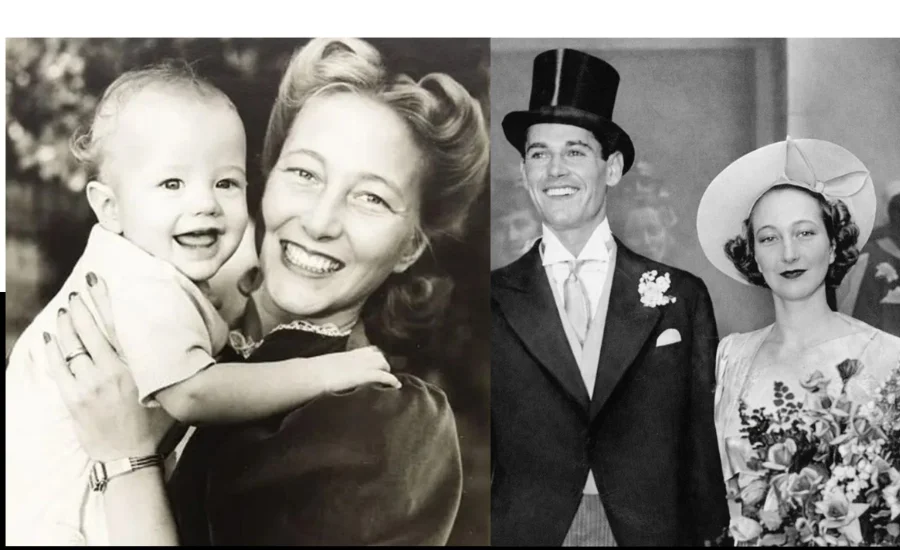
Frances Ford Seymour name in the Fonda dynasty begins somewhere. It begins with a Canadian girl from Brockville, Ontario, who grew up carrying wounds nobody could see. Who moved through two marriages, five children, an oceanside world of galas and society pages, and a private interior life that was slowly falling apart under the weight of things that happened to her before she was old enough to understand them.
Frances Ford Seymour was never just a wife. She was never just a mother. She was a person complicated, wounded, socially brilliant, and ultimately failed by the world around her. And she deserves a story that says all of that clearly.
Complete Bio Table
| Detail | Information |
|---|---|
| Full Name | Frances Ford Seymour Fonda |
| Born | April 4, 1908 |
| Birthplace | Brockville, Ontario, Canada |
| Died | April 14, 1950 (her 42nd birthday) |
| Place of Death | Craig House Sanitarium, Beacon, New York, USA |
| Cause of Death | Suicide |
| Nationality | Canadian-American |
| Father | Eugene Ford Seymour (lawyer; descended from Edward Seymour, 1st Duke of Somerset) |
| Mother | Sophie Mildred Bower Seymour |
| Sibling | One older brother — Ford de Villiers Seymour |
| Notable Ancestor | Related to Samuel Adams (Governor of Massachusetts) and US President John Adams |
| Childhood Location | Brockville, Ontario; moved to Fairhaven, Massachusetts at age 14 |
| High School | Fairhaven High School, Massachusetts (graduated 1925) |
| First Marriage | George Tuttle Brokaw (married January 10, 1931; George died 1935) |
| First Husband’s Background | Millionaire lawyer and sportsman; previously married to Clare Boothe Luce |
| Child from First Marriage | Frances de Villers “Pan” Brokaw (b. October 10, 1931 – d. March 10, 2008) |
| Second Marriage | Henry Fonda (married September 16, 1936, Christ Church, New York City) |
| Met Henry Fonda | Denham Studios, London, on set of Wings of the Morning |
| Children with Fonda | Jane Seymour Fonda (b. December 21, 1937); Peter Henry Fonda (b. February 23, 1940) |
| Total Children | Three (Pan, Jane, Peter) |
| Social Standing | New York socialite; philanthropist; known in elite American and European social circles |
| Mental Health | Diagnosed (posthumously confirmed) with bipolar disorder; depression |
| Psychiatric Care | Admitted to Austen Riggs Center (January 1950); later moved to Craig House |
| Divorce Request | Henry Fonda requested divorce in August 1949 to pursue a new relationship |
| Children Told | They were told she died of a heart attack |
| Jane’s Discovery | Jane learned the truth through a magazine article shared by a school friend |
| Jane’s Memoir | My Life So Far (2005) — detailed account of her mother’s life and death |
| Social Media | Not applicable — historical figure (died 1950) |
| Burial | Ogdensburg Cemetery, Ogdensburg, St. Lawrence County, New York |
Read More: Brett Harrelson
A Canadian Girl Who Carried Everything Quietly
Did you know Frances Ford Seymour came from a family with direct ancestral ties to American presidential history? Her lineage on her father’s side connected her to Edward Seymour, the first Duke of Somerset, who was the brother of Jane Seymour Henry VIII’s third wife. Through different branches of the family tree, she was also related to Samuel Adams, the Massachusetts Governor, and to President John Adams. She came from a bloodline that built things. That governed things. That left marks.
And yet, Frances grew up carrying something that her position in society could not protect her from. According to research later conducted by her daughter Jane, who obtained psychiatric records with legal assistance, Frances experienced repeated sexual abuse during her childhood in Ontario. She was young. The perpetrators were within her family. And the damage from that experience shaped the rest of her life in ways that the twentieth century’s understanding of mental health was entirely unequipped to address.
At fourteen, the family relocated to Fairhaven, Massachusetts. Frances graduated from Fairhaven High School in 1925. On the outside, she was an upper-middle-class girl with good prospects and the kind of social confidence that came from being raised in a family that valued presentation. On the inside, she was already navigating something heavy that had no name yet.
The First Marriage Wealth, Society, and an Early Loss
Did you know Frances’s first husband had previously been married to Clare Boothe Luce the playwright, diplomat, and US Congresswoman who became one of the most prominent American women of the twentieth century?
Frances married George Tuttle Brokaw on January 10, 1931. She was twenty-two years old. George was a millionaire lawyer and sportsman, significantly older, and already twice as famous in New York society as most men of his age and standing. His prior marriage to Clare Boothe had ended in divorce. When Frances became the second Mrs. Brokaw, she stepped into a social world of extraordinary visibility galas, country estates, the kind of life that appeared in society columns and was photographed at charity events.
Their daughter, Frances de Villers Brokaw whom the family called Pan was born on October 10, 1931. She would go on to become a painter and live a long life, passing away in 2008.George Brokaw died in 1935. Frances was widowed in her mid-twenties. The marriage had given her wealth, status, and a daughter she loved. It had also placed her firmly in a social environment that required her to be seen as composed and controlled at all times which was not always possible.
Meeting Henry Fonda and the Marriage That Looked Better From the Outside
Here is where the story shifts. In London, on the set of a film called Wings of the Morning at Denham Studios, Frances crossed paths with Henry Fonda. He was becoming one of the most sought-after actors in Hollywood. She was a recently widowed socialite with money, charm, and an entire life that looked, from the outside, enviably settled.A year after George Brokaw’s death, she and Henry married on September 16, 1936, at Christ Church in New York City. The courtship was short. The commitment was large.
Their daughter Jane was born on December 21, 1937. Their son Peter arrived on February 23, 1940. Two children who would grow up to become two of the most recognizable names in American cinema born into a household that was considerably less stable than its address and social standing suggested.
Did you know Henry Fonda was notoriously emotionally unavailable to the people closest to him? Multiple accounts from Jane’s memoir, from Peter’s autobiography, from those who knew the family describe a man who was publicly celebrated and privately cold. He compartmentalized his professional brilliance from his personal relationships in a way that left very little warmth for the people who needed it most. Frances, already carrying the weight of childhood trauma, a previous marriage, and a mental health condition that had no diagnosis yet, was navigating a marriage with a man who could not or would not meet her where she was.
The Social Life That Masked a Private Collapse
On the surface, the Fonda household in the late 1930s and 1940s functioned. Frances was a fixture of the New York and California social scene. She was known for her elegance, her philanthropic involvement, and her genuine warmth toward the people in her circle. She loved gardening. She had a particular passion for antique objects. She was an engaged mother who made sure her children were exposed to the world in meaningful ways.
But underneath that visible life, Frances was struggling. What she was experiencing would eventually be identified as bipolar disorder a condition characterized by extreme emotional swings that were entirely untreatable by the psychiatric standards of the 1940s. Depression that settled in for months. Periods of intense energy followed by crashes that the people around her could not understand and she herself could not explain.
The marriage deteriorated across the late 1940s. Henry Fonda’s attention had turned to someone else. In August 1949, he told Frances directly that he wanted a divorce. He was in love with a woman named Susan Blanchard and wanted to be free to marry her.The impact of that announcement on Frances was not subtle.
The Last Year and the Truth Her Children Were Not Told
In January 1950, Frances was admitted to the Austen Riggs Center, a psychiatric facility in Massachusetts. She was in crisis. She was transferred to Craig House, a sanitarium in Beacon, New York a private facility for wealthy patients, which told you something about how her suffering was being managed: expensively, privately, and without real effectiveness.
On April 14, 1950 the morning of her forty-second birthday Frances Ford Seymour died by suicide inside Craig House. She used a razor blade. She left a note. She was alone.Henry Fonda organized the funeral quietly. Only he and Frances’s mother attended. He then told the children Jane, who was twelve, and Peter, who was ten that their mother had died of a heart attack. He married Susan Blanchard the same year.
Did you know Jane Fonda did not learn the true circumstances of her mother’s death until she was a teenager, when a school friend showed her a fan magazine that contained the real story? She had been living for years with a version of events that her father had constructed for her, grieving a loss she had been prevented from understanding. When the truth arrived, it arrived without context, without preparation, and through a magazine page.
Peter Fonda described his mother’s death as a rupture that never fully healed the defining fracture of his early life, one that complicated his relationship with his father and that he carried into adulthood in ways he documented in his own memoir, Don’t Tell Dad, published in 1998.
What Jane Fonda Eventually Uncovered and Why It Matters
Jane Fonda spent decades processing what she eventually understood about her mother’s life. When she was writing her 2005 memoir My Life So Far, she engaged lawyers to obtain psychiatric records from the facilities where Frances had been treated. What those records contained reshaped her understanding of who her mother had been.
Frances had told doctors about the childhood abuse. The records documented it. And they documented something else a pattern of responses and behaviors that, seen through the lens of later psychiatric understanding, painted a picture of a woman who had been failed at every significant point in her life: as a child by a family that did not protect her; as a patient by a medical establishment that could not treat what she was actually experiencing; and as a wife by a husband who prioritized his own emotional needs over hers at the most critical moment.
Jane Fonda has spoken publicly about her mother on multiple occasions since the memoir’s publication. In interviews, she has described finally arriving at a place of forgiveness not for what happened, but in recognition of her mother as a full human being who was overwhelmed by forces beyond her control.
Social Media and Historical Legacy A Life Finally Getting Its Full Story
Frances Ford Seymour has no social media account. She lived and died more than seven decades before Instagram existed. What she has, instead, is the kind of legacy that takes decades to reassemble pieced together through memoirs, psychiatric records, genealogical research, and the public reflections of the famous children who spent their lives sorting through what her story meant.She is buried at Ogdensburg Cemetery in St. Lawrence County, New York. Her grave is a small, plain marker for a life that was anything but small or plain.
The conversation around her has shifted significantly since Jane Fonda made it a public topic. Frances Ford Seymour is now discussed not only as Henry Fonda’s second wife or Jane and Peter’s mother, but as a woman whose struggles with untreated mental illness, childhood trauma, and the particular cruelties of mid-twentieth-century marriage deserve to be understood on their own terms.
Also More: Maddie Pack
FAQs
Q1: Who was Frances Ford Seymour?
Frances Ford Seymour (April 4, 1908 – April 14, 1950) was a Canadian-American socialite born in Brockville, Ontario. She is best known as the second wife of actor Henry Fonda and the mother of actors Jane Fonda and Peter Fonda. She was also the daughter-in-law of New York high society through her first marriage to millionaire George Tuttle Brokaw.
Q2: Where was Frances Ford Seymour born?
She was born in Brockville, Ontario, Canada, on April 4, 1908. When she was fourteen, her family relocated to Fairhaven, Massachusetts, where she completed her schooling and graduated from Fairhaven High School in 1925.
Q3: How many times was Frances Ford Seymour married?
Twice. Her first marriage was to George Tuttle Brokaw, a millionaire lawyer and sportsman, in January 1931. George died in 1935. She married Henry Fonda on September 16, 1936, at Christ Church in New York City.
Q4: How many children did Frances Ford Seymour have?
Three. Her daughter Frances de Villers Brokaw, known as Pan, was born from her first marriage in 1931. With Henry Fonda, she had daughter Jane in December 1937 and son Peter in February 1940.
Q5: How did Frances Ford Seymour die?
She died by suicide on April 14, 1950 her forty-second birthday while a patient at Craig House, a private sanitarium in Beacon, New York. Her death came months after Henry Fonda had told her he wanted a divorce.
Final Words
Frances Ford Seymour’s life is often remembered through the fame of her husband Henry Fonda and her children Jane Fonda and Peter Fonda, but her own story is far more complex. Born in 1908 in Brockville, Ontario, she came from a socially prominent background and lived a life that moved between privilege and deep personal struggle. After two marriages, she became part of Hollywood’s golden-age elite, yet behind the public image she faced serious mental health challenges and emotional pain that were not properly understood or treated at the time. Despite her social status, her life was shaped more by inner struggles and personal hardship than by glamour or fame.
Her marriage to Henry Fonda placed her at the center of American film culture, but it also brought emotional distance and instability. She was a mother to three children, including Jane and Peter Fonda, who would later become major film icons themselves. In 1950, at the age of 42, she died by suicide while in a psychiatric facility, a tragic end that was long hidden from her children. Today, Frances Ford Seymour is remembered not only as part of the Fonda family legacy, but as a woman whose life reflects the overlooked struggles of mental illness and the silent pressures faced by women of her era.