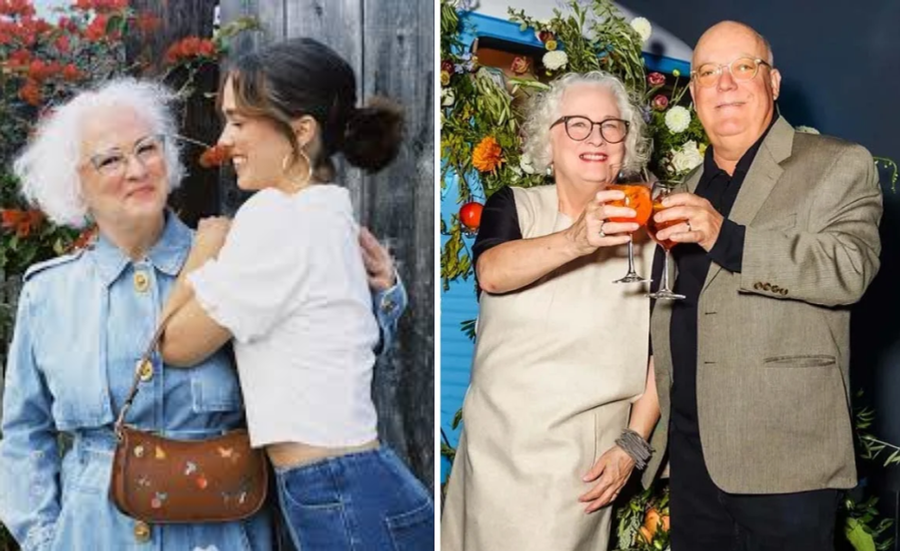
Valerie M. Richardson is an American journalist best known for her work as a reporter and correspondent covering politics, public policy, and national affairs. She has been associated with The Washington Times, where she has reported on a wide range of topics including government, elections, education, and cultural issues. Over the years, Richardson has built a reputation for detailed reporting and in-depth coverage of major developments in American public life.
Throughout her journalism career, Valerie M. Richardson has contributed extensively to political and policy reporting, often focusing on issues that shape public debate in the United States. While she maintains a relatively private personal life compared to many media figures, her professional work has earned recognition among readers interested in American politics and current affairs. Her reporting continues to appear in national news coverage, making her a respected voice in contemporary journalism.
Bio Table
| Full Name | Valerie M. Richardson |
|---|---|
| Occupation | National Reporter, Political Correspondent, Western Bureau Chief (de facto) |
| Employer | The Washington Times (Washington, D.C.) |
| Bureau Location | Littleton / Denver Metro Area, Colorado |
| Secondary Outlet | The Colorado Observer (contributor) |
| Career Start | 1988 — hired at The Washington Times |
| Active Years | 37+ years (1988–present, 2026) |
| Education | Montclair High School; academic path through Claremont, California |
| Beat / Coverage Areas | Western U.S. politics, legal and court affairs, Title IX / transgender athlete policy, campus antisemitism, education reform, cultural movements, pro-life policy, federal land rights |
| X (Twitter) Handle | @valrichardson17 |
| Professional Email | vrichardson@washingtontimes.com |
| Active profile — Denver Metropolitan Area | |
| Muck Rack | Verified profile; portfolio tracked across outlets |
| Family | Mother of three children; based in Colorado with family |
| Notable Family Link | Son Bradford Richardson — also a reporter at The Washington Times; first mother-son duo in the paper’s 35-year history |
| Writing Identity | “National reporter for @WashTimes. Covering the West & rooting for the home team.” |
| Employer Type | Conservative-leaning national newspaper; one of the most-read political dailies in the U.S. |
Read More: Star Herrmann
How a Journalism Class Launched a Four-Decade Career
The origin story is straightforward. A high school journalism class probably not unlike thousands of others being taught across the country at the same time. But something about it caught hold of Valerie Richardson in a way that never loosened its grip. She went on to Montclair High School and eventually found herself navigating a path through Claremont, California that would lead, ultimately, to the front door of one of Washington’s most prominent conservative newspapers.
She walked into The Washington Times in 1988 terrified she might not last a month. The newsroom was demanding. The deadlines were merciless. Metropolitan daily journalism is not a profession that flatters the unprepared. But Valerie was not unprepared she was simply honest enough to admit that the bar was high and that survival was not guaranteed. That honesty, that clear-eyed realism about what the job actually requires, turned out to be one of the defining qualities that kept her there long after many others had rotated out.
Valerie M. Richardson is the only reporter in The Washington Times’ 35-year history who has reported alongside her own child. Her son Bradford joined the paper’s staff in 2017, and neither of them saw it coming she had three children and never once imagined journalism would travel down the family line.
The Beats That Define Her — A Portfolio Built on Courage
Some reporters cover what is comfortable. Valerie covers what is consequential. Her portfolio in the last two years alone reads like a master class in choosing stories that matter regardless of whether they are politically popular to pursue. Transgender Athlete Policy, Title IX Investigations, Campus Antisemitism Education Reform, Western U.S. Politics, Federal Court Coverage, Pro-Life Movement Cultural Ballot Initiatives, Heritage Foundation, State Legislation
In August 2025, she broke down how transgender college athletes were navigating the wave of new federal restrictions following executive orders banning biological males from female scholastic sports. In January 2026, she was tracking the Trump administration’s simultaneous launch of eighteen Title IX investigations across ten states covering school districts in California, Connecticut, Hawaii, Massachusetts, and beyond all filed from her desk in Colorado without missing a beat. That same month, she was courtside at the Supreme Court’s landmark hearing on state bans on transgender athletes in female sports, talking to the attorneys general and the athletes who had spent years building those legal arguments.
By March 2026, she was already profiling the brewing ballot-initiative fights in blue states where voters not legislators were being asked to decide the future of female sports. The breadth is staggering. The consistency is almost without precedent in modern one-person bureau journalism.”She doesn’t just report the policy she follows it into the courtroom, into the gym, into the state capital, and all the way to the Supreme Court steps.”
Denver Is Not a Compromise. It Is the Strategy.
The common assumption in American media is that the best stories live in Washington or New York. Valerie Richardson has spent thirty-seven years proving that assumption wrong, one filed story at a time. Operating from the Denver Metro Area specifically Littleton, Colorado she covers a geographic and cultural territory that most national newspapers assign to parachute journalists who land, file a reaction piece, and leave before they understand the terrain.
What Valerie has instead is something accumulated over years of staying put: source networks that take a decade to build, an understanding of how Western state politics actually operate beneath the surface of the headlines, and the kind of institutional memory that transforms breaking news into context. When Colorado Springs produces a story about a staged hate crime, she doesn’t need to catch up. When a pro-life ballot initiative moves through the Mountain West, she already knows the players, the history, and the stakes.
Valerie once wrote that her children watched her conduct phone interviews from home, dash off to press events, and scramble toward deadlines for years and her son Bradford grew up thinking this was simply what normal life looked like. That turned out to be exactly the kind of professional exposure that led him to journalism himself.
This depth is what separates Western bureau expertise from casual national coverage. It is also why Valerie’s byline appears not only on breaking news but on the analytical, context-heavy pieces that require knowing a region the way you know a neighborhood every block, every history, every undercurrent that won’t surface in a press release.
The Son Who Followed the Byline
In 2017, The Washington Times turned thirty-five years old and published a celebratory look at its own history. Inside that retrospective, a quietly remarkable fact surfaced: for the first time in the publication’s three-and-a-half-decade existence, a parent and child were both filing stories under its masthead simultaneously. Valerie and her middle child Bradford had become the paper’s first-ever mother-son reporting duo.
Bradford’s path eerily mirrored his mother’s a high school journalism class that sparked something, a student newspaper that turned it into a habit, a path through Claremont, California, and eventually a job at the same newspaper where his mother had spent her entire career. Valerie wrote about this milestone with characteristic understatement, describing her initial terror of not lasting a month at the paper, noting she had no children at the time of her hiring, and quietly marveling that nearly three decades later she was sharing a masthead with the person she had watched grow up in her newsroom-adjacent home.The story of Bradford joining the Times is, in its own way, a tribute to what Valerie built not just a career, but a vision of journalism as a craft worth inheriting.
Social Media, Public Image & How She Moves Through the World
Valerie Richardson’s public presence is understated in the way that only truly confident people can pull off. On X, she operates under the handle @valrichardson17 no elaborate branding, no viral hot takes, no personal manifesto pinned to the top. Twelve words sum up her Muck Rack bio: “National correspondent for @WashTimes. Covering the West & rooting for the home team.” That’s it. A job and a loyalty. Efficient, accurate, and entirely on brand.
On LinkedIn where she has profiles under two slightly different formats she is listed in the Denver Metropolitan Area, connected to the journalism community there, visible enough to be found by sources and editors but not so aggressively present that the platform becomes its own performance. She also contributes to The Colorado Observer, extending her reach into Colorado-specific political coverage beyond the national Times readership.
The striking thing about Valerie’s public persona is how firmly the image is the work.There are no speaking circuit bookings to track, no podcast appearances to catalog, no Twitter feuds to document. Instead, there is an archive of reporting hundreds of bylines stretching back decades, each one doing the work that profiles and panels can only talk about.
Also More: Sylvie Anderson
FAQs
Who is Valerie M. Richardson?
She is a veteran national reporter for The Washington Times, working out of the Denver, Colorado area where she serves as the paper’s primary voice on Western U.S. politics, legal affairs, and cultural policy. She has been with the Times since 1988 a tenure spanning more than thirty-seven years.
What is Valerie Richardson’s Twitter or X handle?
She is active on X under @valrichardson17. Her presence there is professional and measured no personal drama, just reporting-linked commentary and story shares consistent with her Times output.
Where exactly is Valerie Richardson based?
She works from Littleton, Colorado, within the greater Denver Metropolitan Area. She operates from home which her children watched her do for years and covers the entire American West from that base.
What are Valerie Richardson’s main coverage areas in 2025–2026?
Her recent bylines center heavily on transgender athlete policy and Title IX federal investigations, campus antisemitism across U.S. universities, Western state ballot initiatives, the Heritage Foundation’s internal politics, and pro-life policy movements. The range is wide; the expertise is deep.
How long has she been at The Washington Times?
She joined in 1988, which as of 2026 makes her tenure thirty-eight years an almost unheard-of run in an industry that has shed sixty percent of its newsroom workforce in the last fifteen years alone.
Who is Bradford Richardson and how is he connected to Valerie?
Bradford Richardson is Valerie’s middle child and also a reporter at The Washington Times. When he joined in 2017, they became the paper’s first-ever mother-son reporting pair a distinction the Times itself noted in its 35th-anniversary retrospective. He followed an almost identical path to hers, including a high school journalism class and a route through Claremont, California.
Does Valerie Richardson write for publications other than the Washington Times?
Yes she also contributes to The Colorado Observer, a Colorado-specific political outlet, extending her regional reach beyond the national Times platform. Her work has additionally been cited and picked up by various affiliated and independent outlets.
Final Words
Valerie M. Richardson’s career reflects the value of persistence, regional expertise, and a deep commitment to journalism. Over nearly four decades at The Washington Times, she has built a reputation for covering some of the most important political, legal, and cultural issues shaping the American West and the nation as a whole. Her ability to combine breaking news with long-term context has made her one of the newspaper’s most trusted and recognizable reporters.
In addition to her career accomplishments, Richardson’s impact on the following generation—most notably through her son Bradford Richardson’s own media career defines her legacy.Whether reporting from Colorado courtrooms, state capitols, or national policy debates, Valerie Richardson continues to demonstrate that impactful journalism is built not on personal fame but on consistent, reliable reporting that informs the public and preserves the historical record.